


Note: While we hope you have time to grab a cup of coffee, sit down, and read our full report, we know that isn’t always possible. To skip to a bulleted TL;DR, scroll all the way to the end.
A few months ago, a member of the MIP Facebook group brought something troubling to our attention regarding sex ed in the Boston Public Schools. She had received parental notification of an upcoming “Sexual Health Education” unit and had questions about how to opt out, but the paperwork she received was confusing. When we saw the documents, warning bells went off immediately.
The first letter she shared said, “Families have the right to opt their student out of any lessons of the curriculum that primarily involves ‘human sexuality issues’ without penalty…” and then references Mass. Gen. Laws ch. 71, § 32A (the opt out law) and the BPS Bulletin on Human Sexuality Education. It also lists five “Lessons for Opt-Out.”
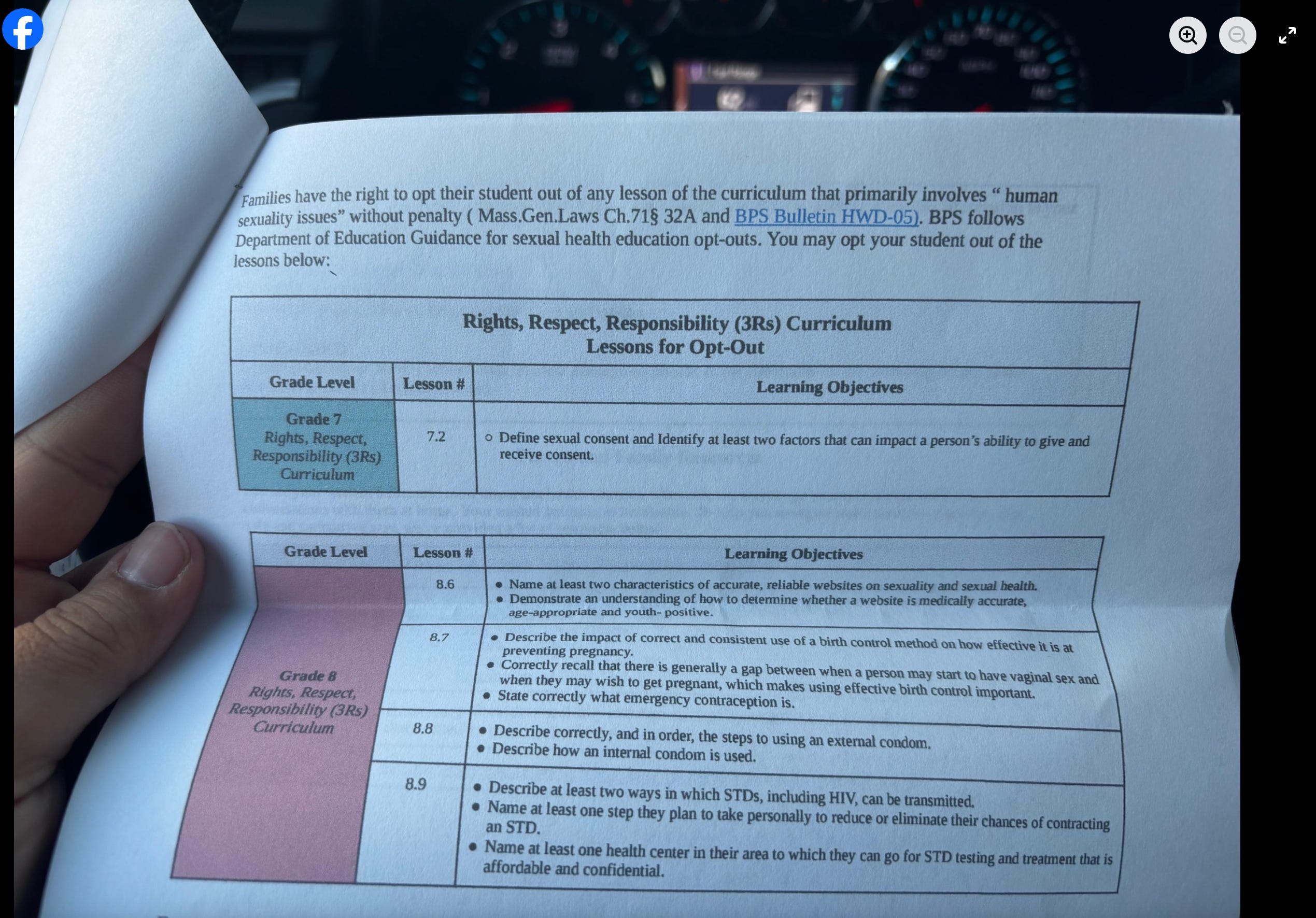
But the second page she shared contained a longer list of lessons, with only two lessons labeled as “may opt out.” There were other lessons that also seemed to “primarily involve human sexuality issues,” such as lessons on sexual intercourse, sexual anatomy, gender identity and “non-heterosexual orientations,” but they were not included in the opt out list.
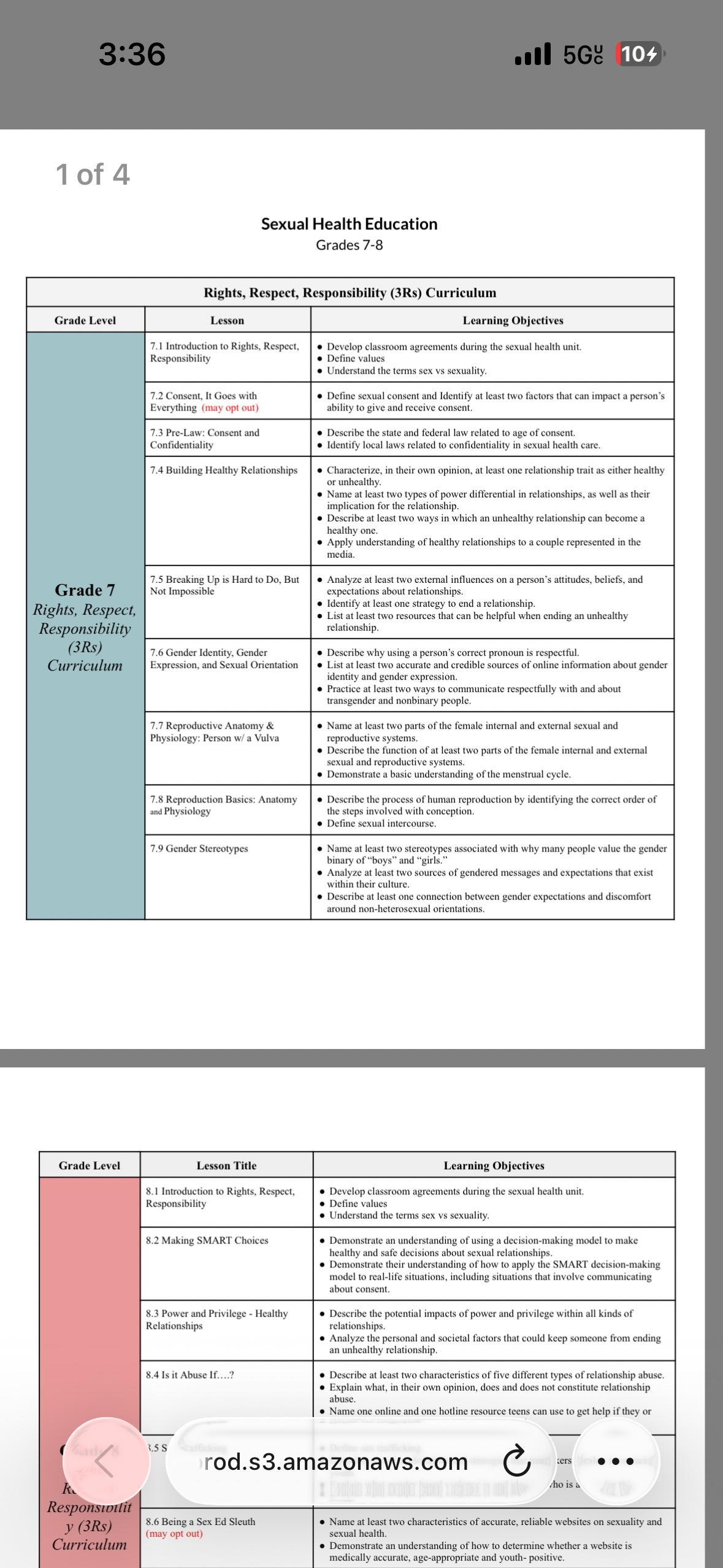
Based on these documents it looked like the Boston Public Schools was trying to tell parents that they could only opt out of some sex ed lessons, and not others. We looked online to find out more, but the information on the Sexual Health page on the BPS website said something different, and the pages the parent shared with us weren’t there. Something was happening in Boston, and we knew we needed to keep our eye on it.
A couple months later, we noticed that the BPS had revised the Sexual Health page on their website. The two documents the parent shared were now there, and the concerns we had turned out to just be the tip of the iceberg.
The BPS has apparently undergone a major overhaul of its health and sex ed program, and many changes have happened during the current school year. One of these changes is a districtwide move is to exclusively use Rights, Respect, Responsibility (the 3Rs), one of the most graphic sex ed curricula available, across grades K-12 for sex ed. Another change was the recommendation to only allow parents to opt out of certain sex ed lessons and not others - a fact not explicitly explained to parents, and one that could violate their rights under the MA sex ed opt out law.
We dug deeper into the newly posted information on the website, and here is what we found.
The updated BPS Sexual Health page points parents toward the Advocates for Youth: Rights, Respect, Responsibility website as well as various documents, such as the BPS Human Sexuality Education Policy and lesson charts for the following grades:
(Note: The website does not yet contain the link to the Grades K-3 Lesson Chart, but we obtained it elsewhere. You can view this lesson chart here: Lesson Chart: Grades K-3. Parents of kids in this age group especially need to pay attention. We’ll talk more about that later.)
The lesson charts on the BPS website do not provide links to the lessons themselves, but they do show us the learning objectives for each lesson, as well as their determination of which lessons from which parents “may opt out.” It is clear that many lessons not labeled “may opt out” also contain human sexuality issues. See one example below (yellow notes ours).
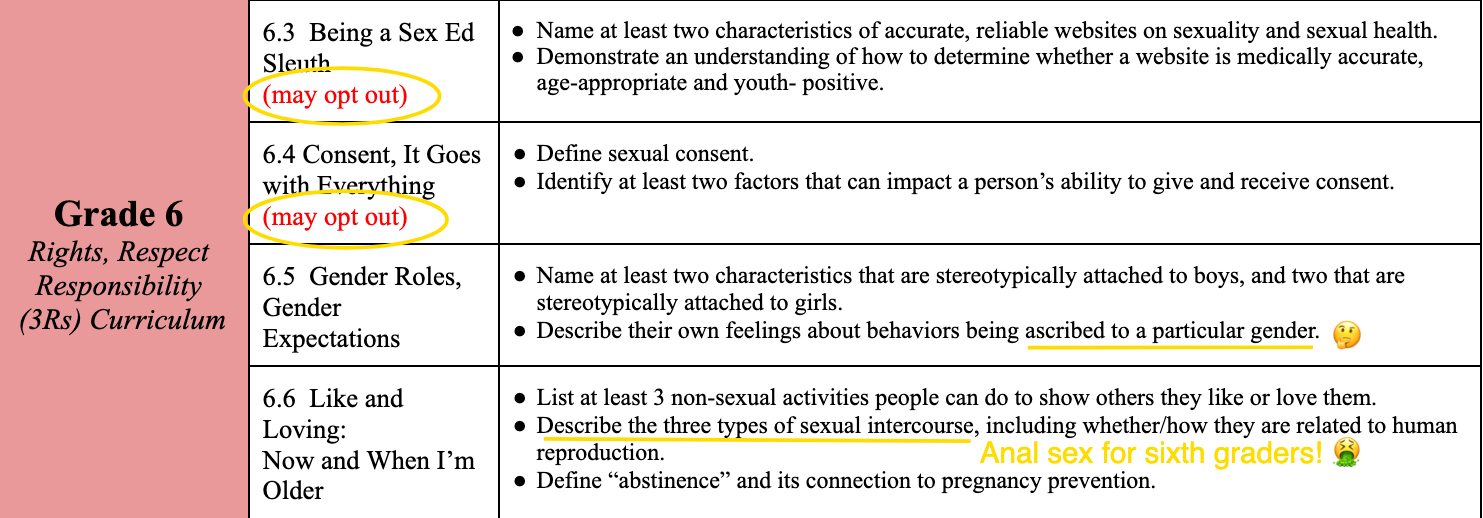
This miscategorization of lessons is a far-reaching issue. According to the information we found, the BPS “Sexual Health Education” curriculum contains 76 lessons across grades K-12, all from the 3Rs. Because the 3Rs is a “sexuality education” curriculum and these lessons are part of the BPS “Sexual Health” unit, it is possible that every single one of these lessons could arguably be subject to the MA sex ed opt out law. However, currently the BPS has only labeled 13 of these lessons as “may opt out.” Based on our review of the available lesson descriptions provided in the lesson chart documents, we have identified 40 other lessons that include instruction on human sexuality issues or are likely to include such instruction. Some of these lessons contain discussions on anal sex, gender transition, reproductive anatomy, and sexual attraction - all of which are “human sexuality issues,” but are not eligible for opt out, per the BPS.
These mislabeled lessons can be found in every one of the four age groups listed above, but to get a bit more specific, let’s take a look at how this issue could impact a 5th grade student and his or her family.
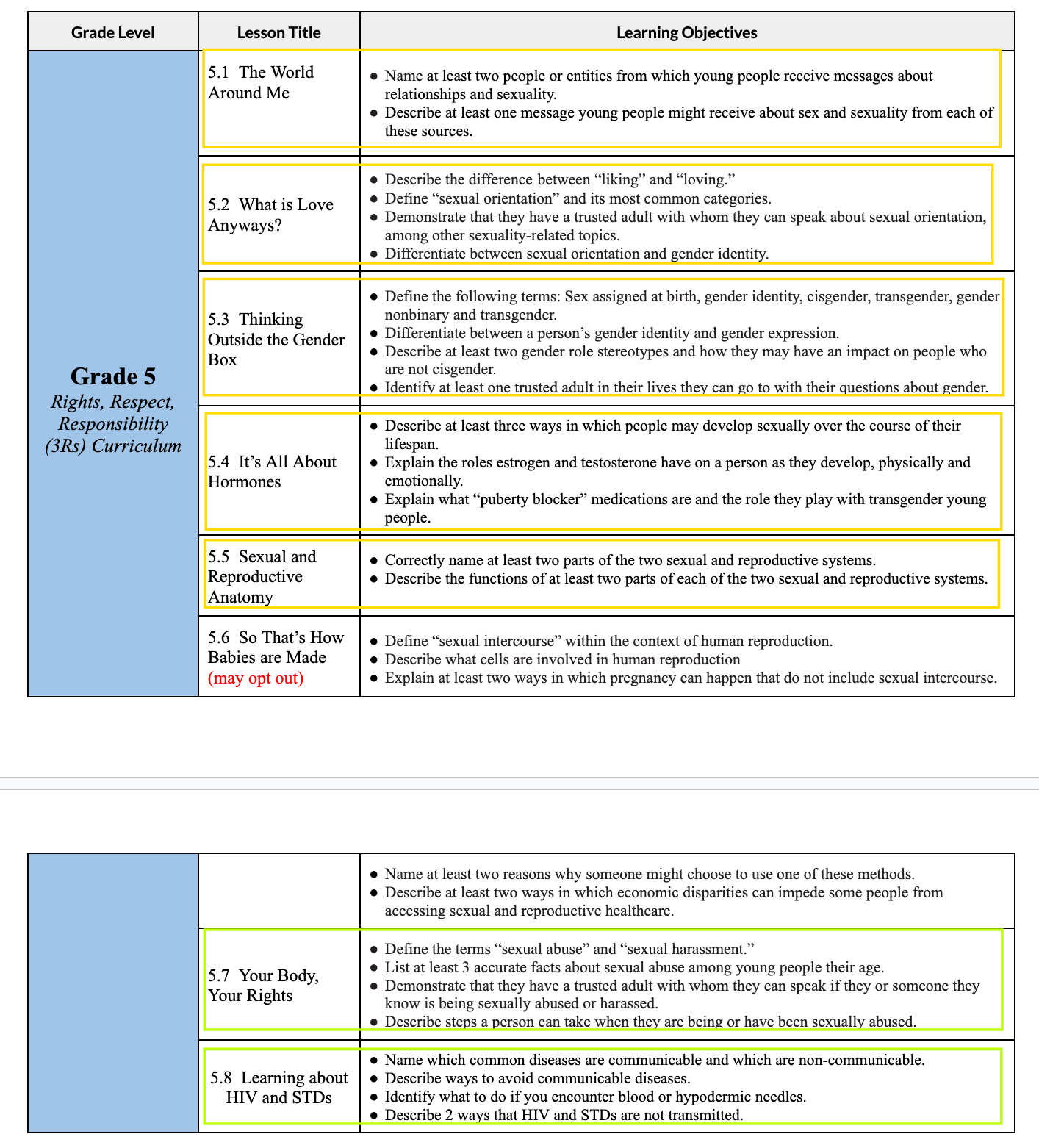
According to the BPS’s Grade 5 Lesson Chart below, parents of 5th graders may only opt their children out of ONE of the eight 5th grade lessons, Lesson 5.6: “So That’s How Babies are Made.” That lesson is marked “may opt out” in red by the BPS. None of the other lessons are included in the opt out, even though based on the descriptions provided, it appears that five of those lessons (we marked them in yellow) primarily involve human sexuality issues, and two others might (we marked them in green).
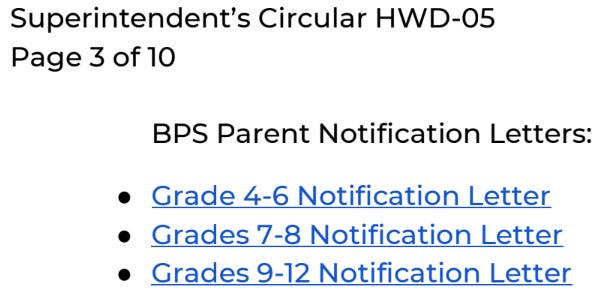
Are parents notified of these other lessons? Yes… and no. According to the BPS Human Sexuality Education Policy, the parents of students in grades 4-12 receive a notification letter about sex ed and their opt out rights. They also provide links to the sample letters. That means the 5th grade parents would receive a letter similar to the Grade 4-6 sample letter below, notifying them of the upcoming lessons and instructing them on how to opt out. You can also access this sample letter directly here.
Notice what this letter says about opting out, and how many lessons it informs the parents about.
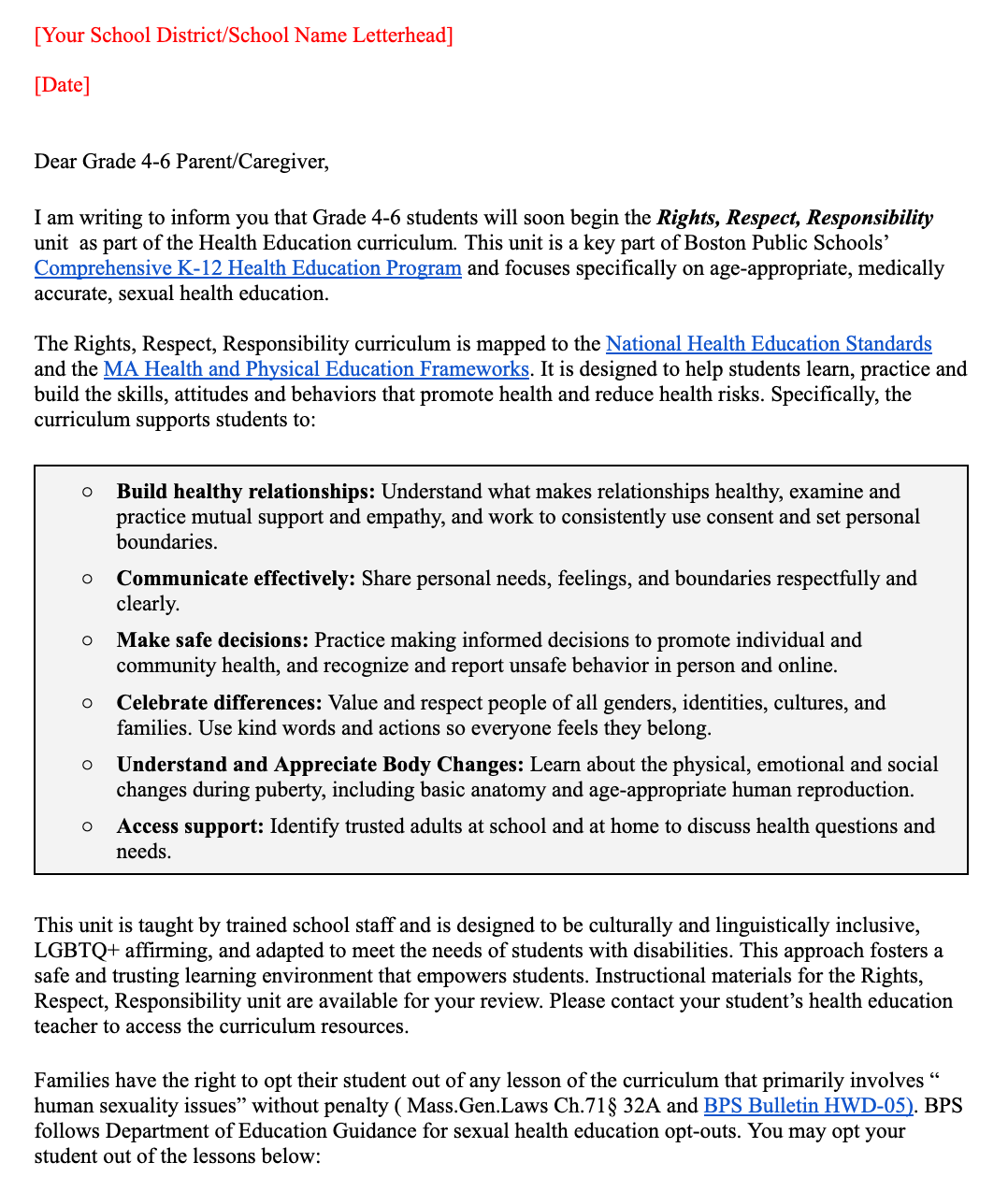
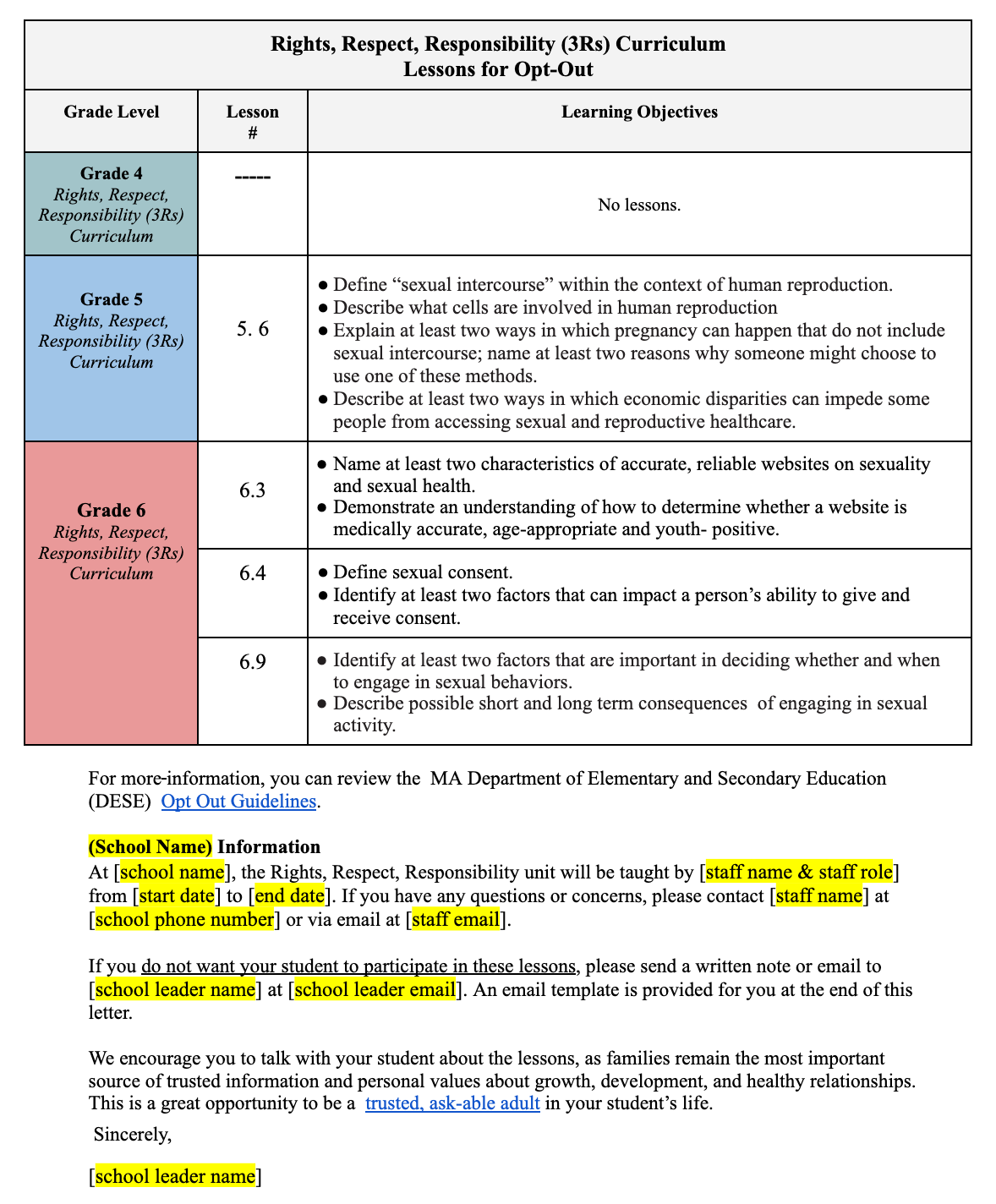
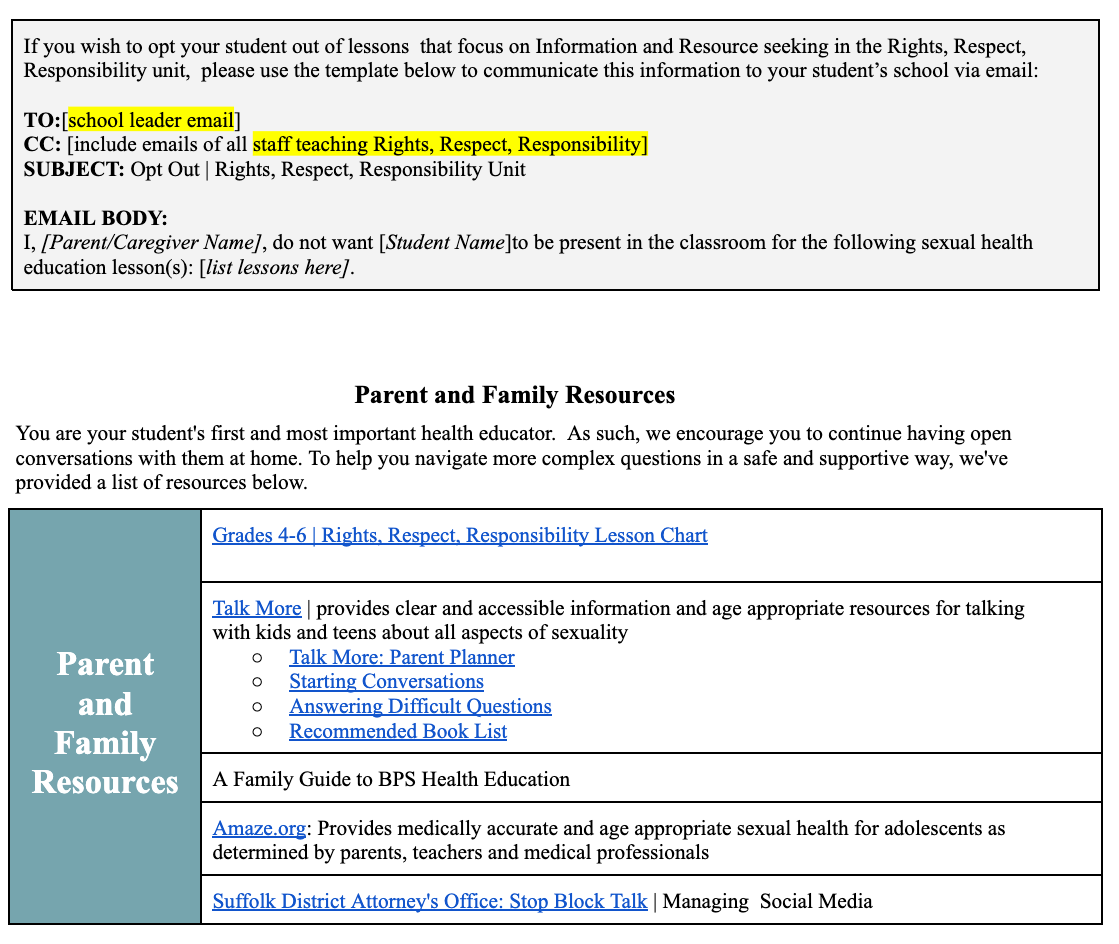
Because of how the opt out law is mentioned and then followed by a list that includes only one 5th grade lesson, parents who read this notice would likely assume that the lessons mentioned in the notice itself are the ONLY lessons about sex (in the case of 5th grade, that would mean ONE LESSON). However, this is not the case. The full list of sex ed lessons, which contains the names and learning objectives of the seven other 5th grade lessons, can only be seen when the parent clicks the Grades 4-6 Rights, Respect, Responsibility Lesson Chart link at the top of the third page. This link, which is not clearly labeled “sex ed” and is mixed in with other links such as one about social media, could easily be missed by busy parents.
We have to wonder, how many parents after reading this letter would send in an opt out letter assuming that it protects their child from all of sex ed, only to learn later that their 5th grader was taught about sexual orientation, puberty blockers, sexual anatomy, gender identity and more?
Parents would be even more likely to be confused if they had done their due diligence and started their school year by reading the Boston Public Schools Family Guide 2025-2026, a “helpful resource” created by the BPS “for parents and caregivers that summarizes the laws, policies, regulations, and practices that are important to students.” In this year’s BPS Family Guide under Sexual Health Education, it clearly states that sexual health lessons may include topics such as healthy relationships and puberty. It also says, “If you do not want your child to participate in sexual health education classes, please contact the principal of your child’s school in writing or by email to let them know of your decision.”
Any parent who read the relevant pages of this year’s BPS Family Guide (seen below) would be led to believe that opting out of sexual health education classes would mean that their child is exempt from ALL of the classes with the topics listed, not just a few.
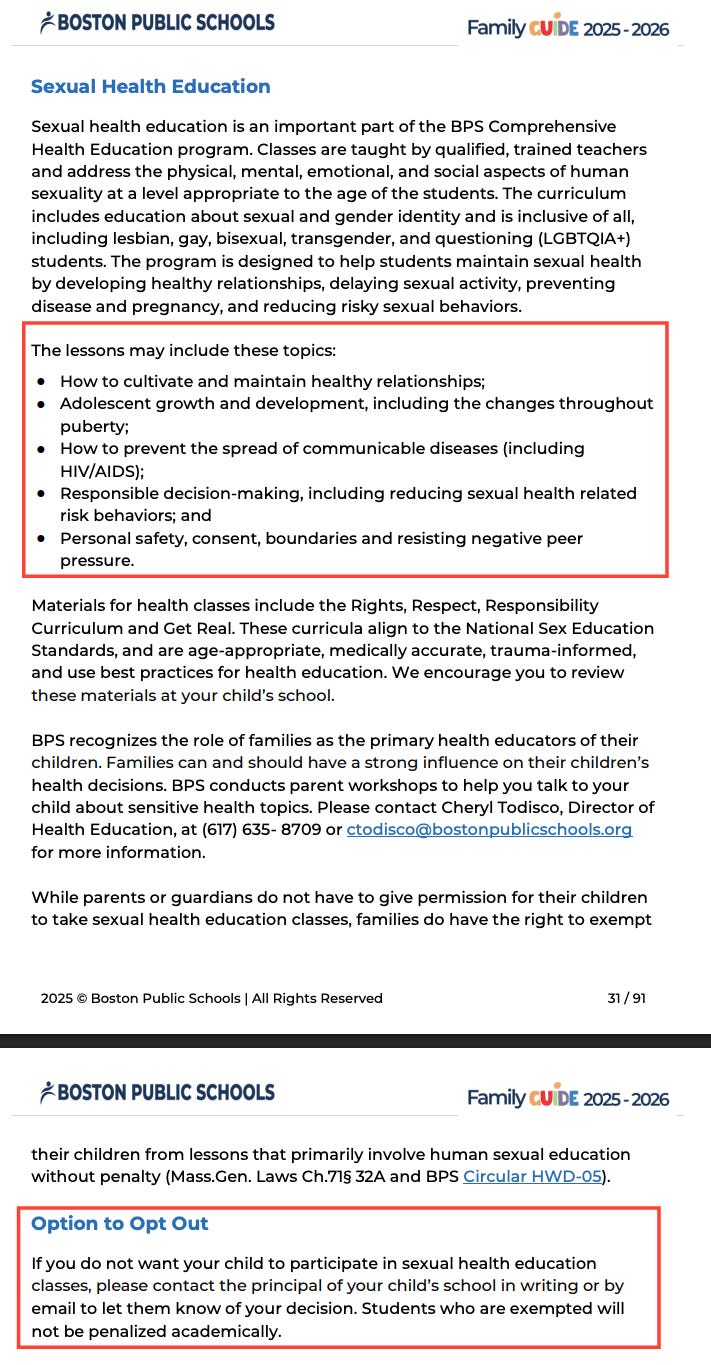
It appeared to us that, based upon the information provided by the BPS about the content of the 3Rs lessons, parents are being misled about - and possibly denied - their opt out rights under MA law. We brought this to the attention of Attorney Whiting at the Massachusetts Liberty Legal Center, who reviewed the BPS’s documents, saw the same concern, and took action.
On May 13th, Attorney Whiting sent a letter to Cheryl Todisco, the Director of Health Education for the BPS outlining the district’s obligations under the MA opt out law, and urging the BPS to update its documents to conform to this law. Attorney Whiting warns Ms. Todisco that the MLLC stands ready to assist any parent wrongly denied an opt out by the BPS.
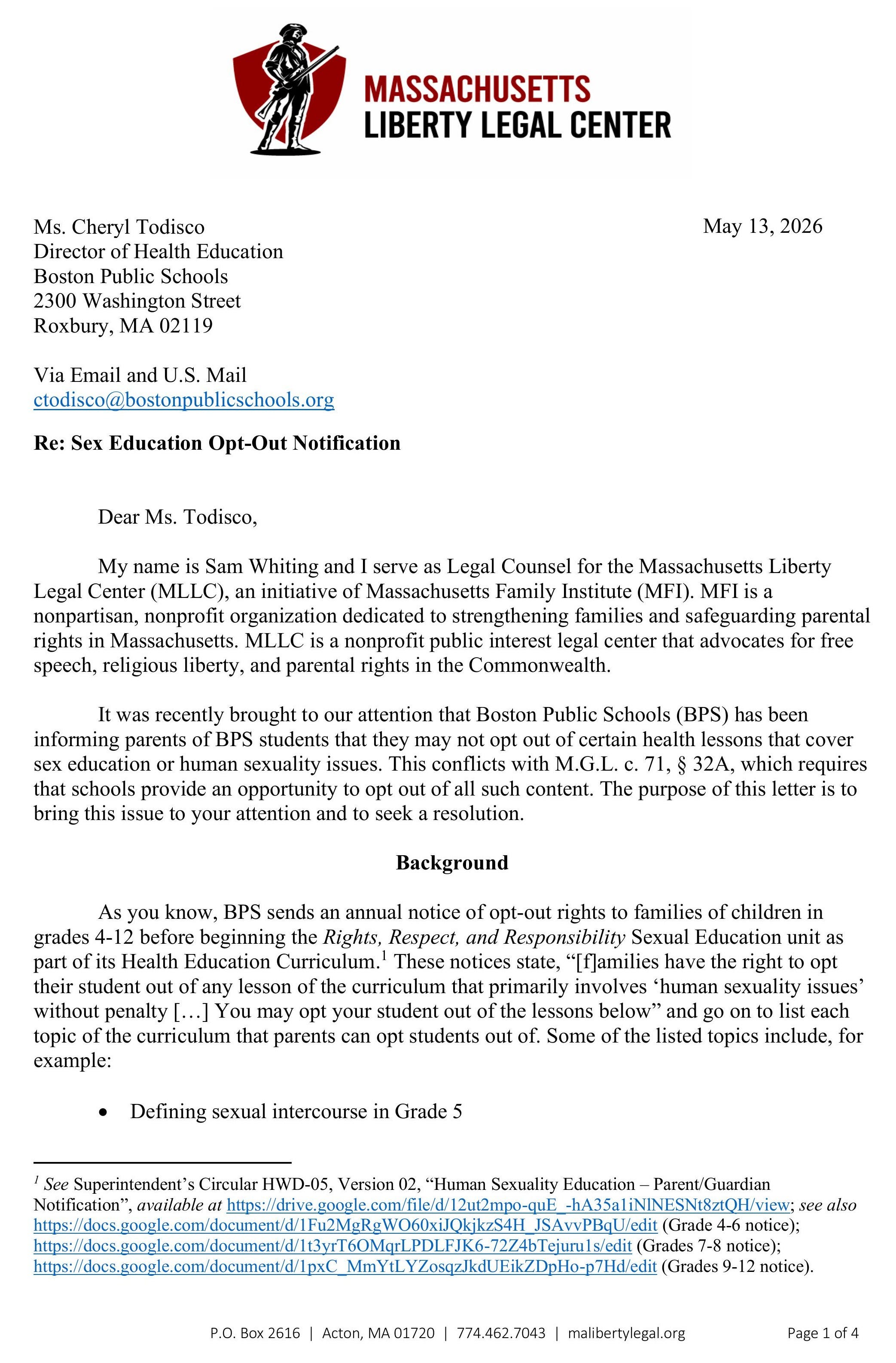
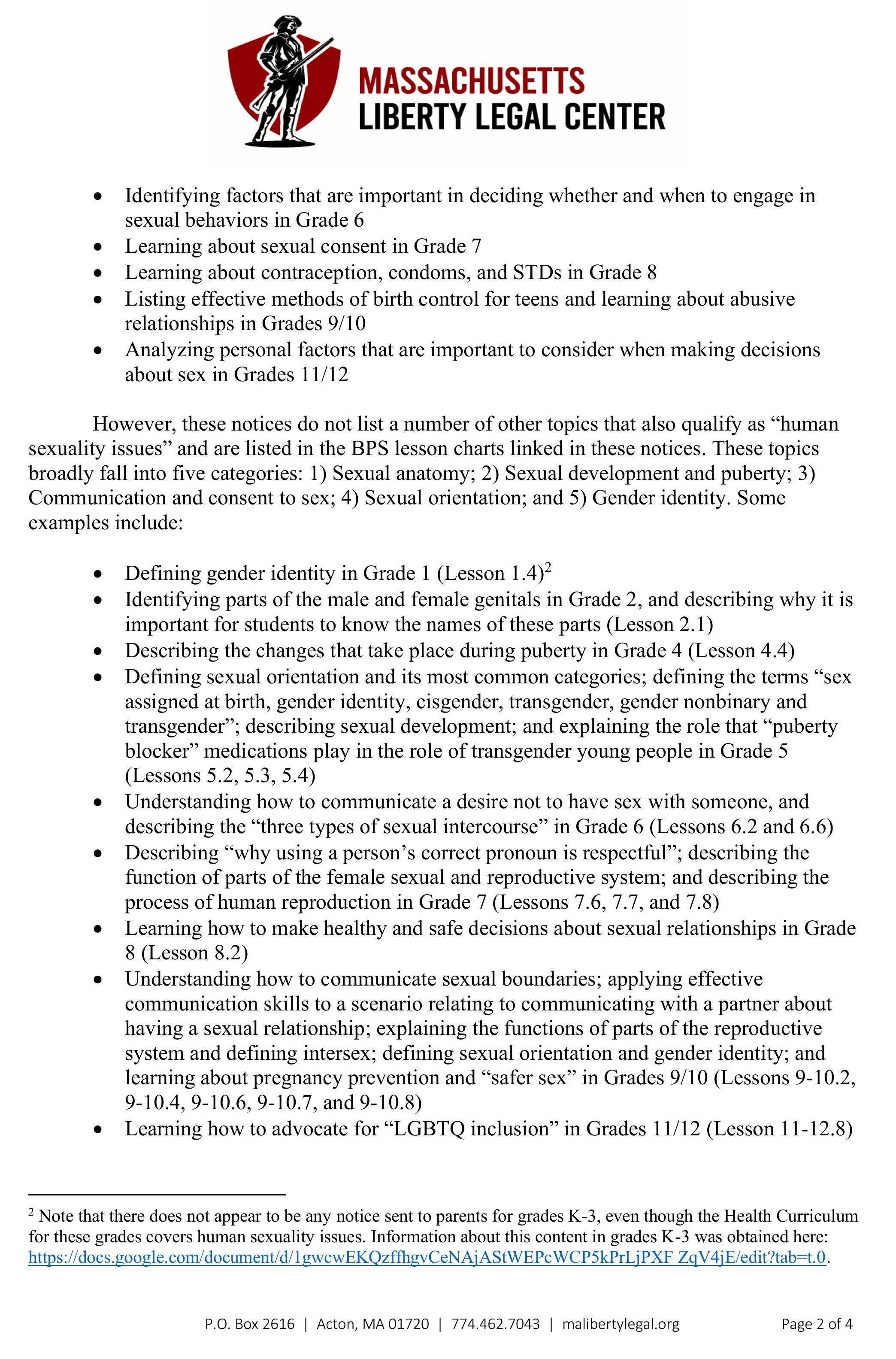
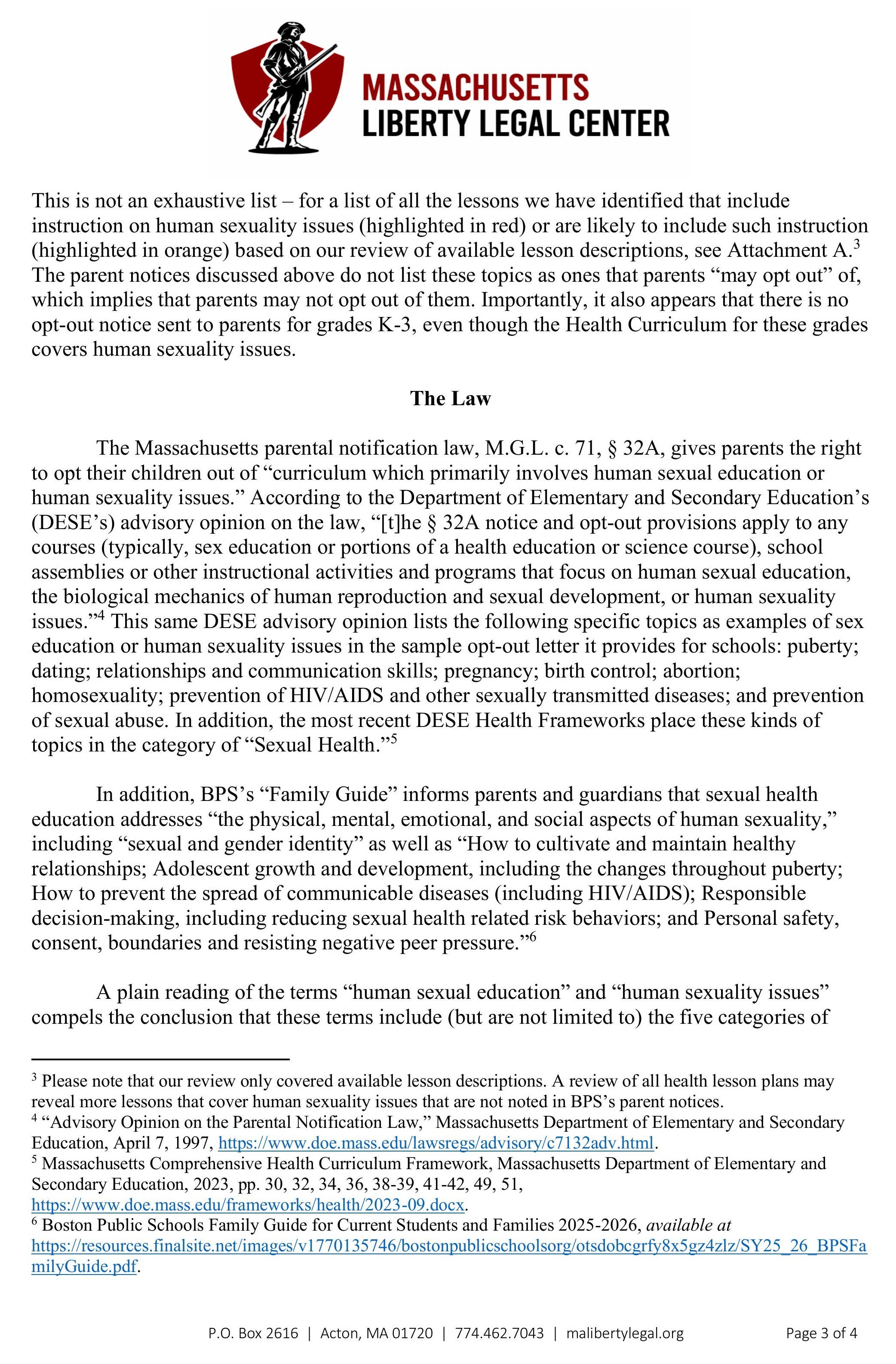
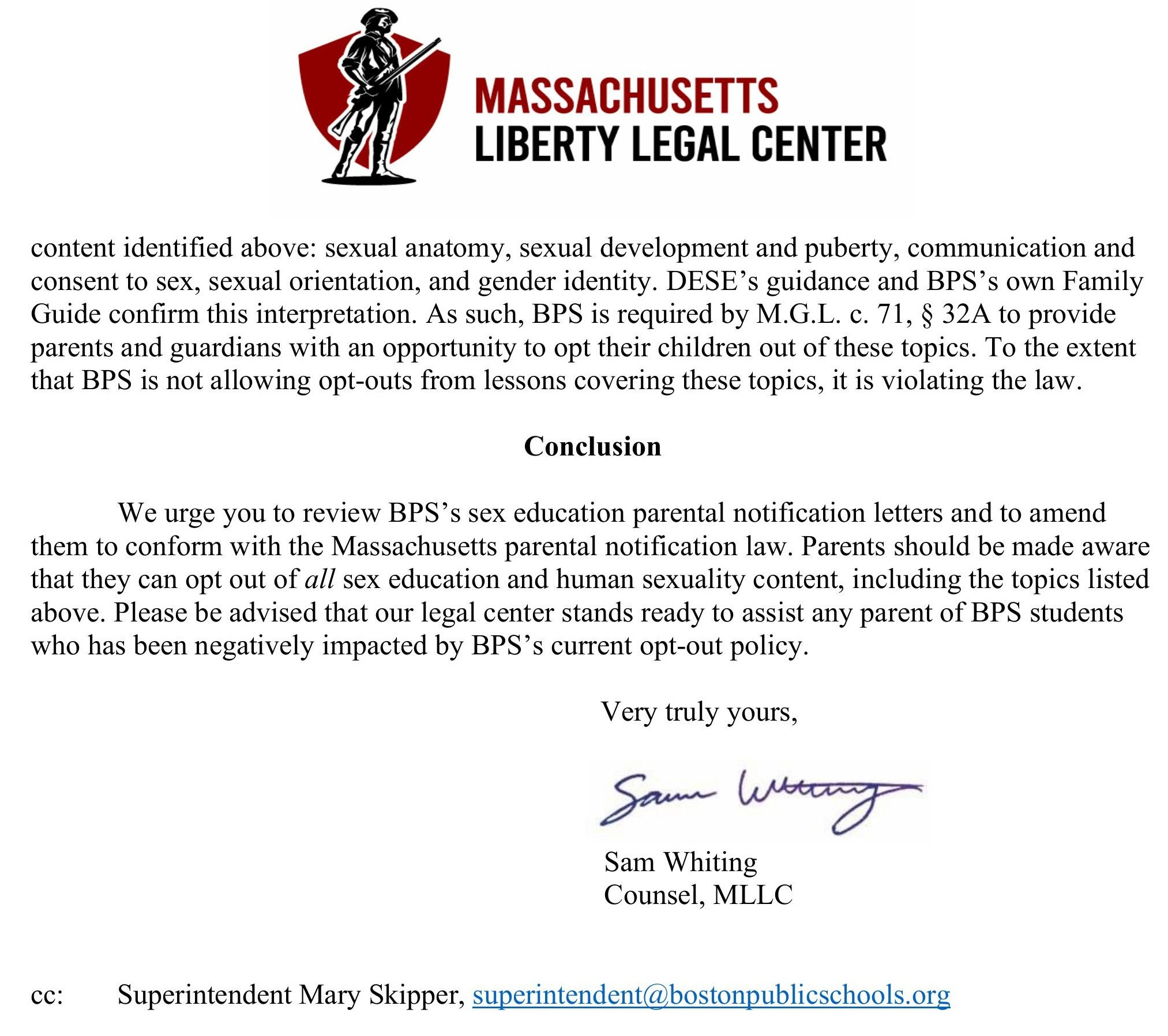
To read and download the entire letter plus attachments, click here.
As of posting this article, the BPS has not responded to this letter. We will update you when they do - but we aren’t waiting around. After discovering the BPS’s opt out shell game, some other questions came to mind, and we did some more digging.
The BPS is the largest district in the state, with over 48,000 students across 119 schools. It is the size of a small city, and it’s at the heart of our Commonwealth. Because the BPS is so influential, it’s not just Boston parents who need to know about what we found. Parents in other towns and cities need to see this too.
Here are the questions we wanted to answer.
Q: It seems like they switched the sex ed program up mid-year. Why?
A: They have a brand-new plan.
The mid-year changes to sex ed appear to be driven by the BPS Strategic Plan for Health Education 2025–2030 (referred to as the Plan going forward), a document that was still in development after the 2025-2026 school year had already started, and was presented to the BPS District Wellness Council in January 2026. The Plan is now on the BPS website, but it was only added within the last few months. This newly-finalized Plan pushes for a districtwide sex ed program on all BPS students.
According to the Plan, its goal is to “…steer our collective efforts to expand access to health education, strengthen the health educator workforce, invest in educator development, and cultivate inclusive, engaging health education experiences for every student” (from PreK through grade 12).” This includes implementing “targeted strategies” to ensure “equitable access” to health education across schools. You can read the full report, written by the Rennie Center for Education Research & Policy on behalf of the Boston Public Schools Office of Health & Wellness, as well as the executive summary on the BPS website here.
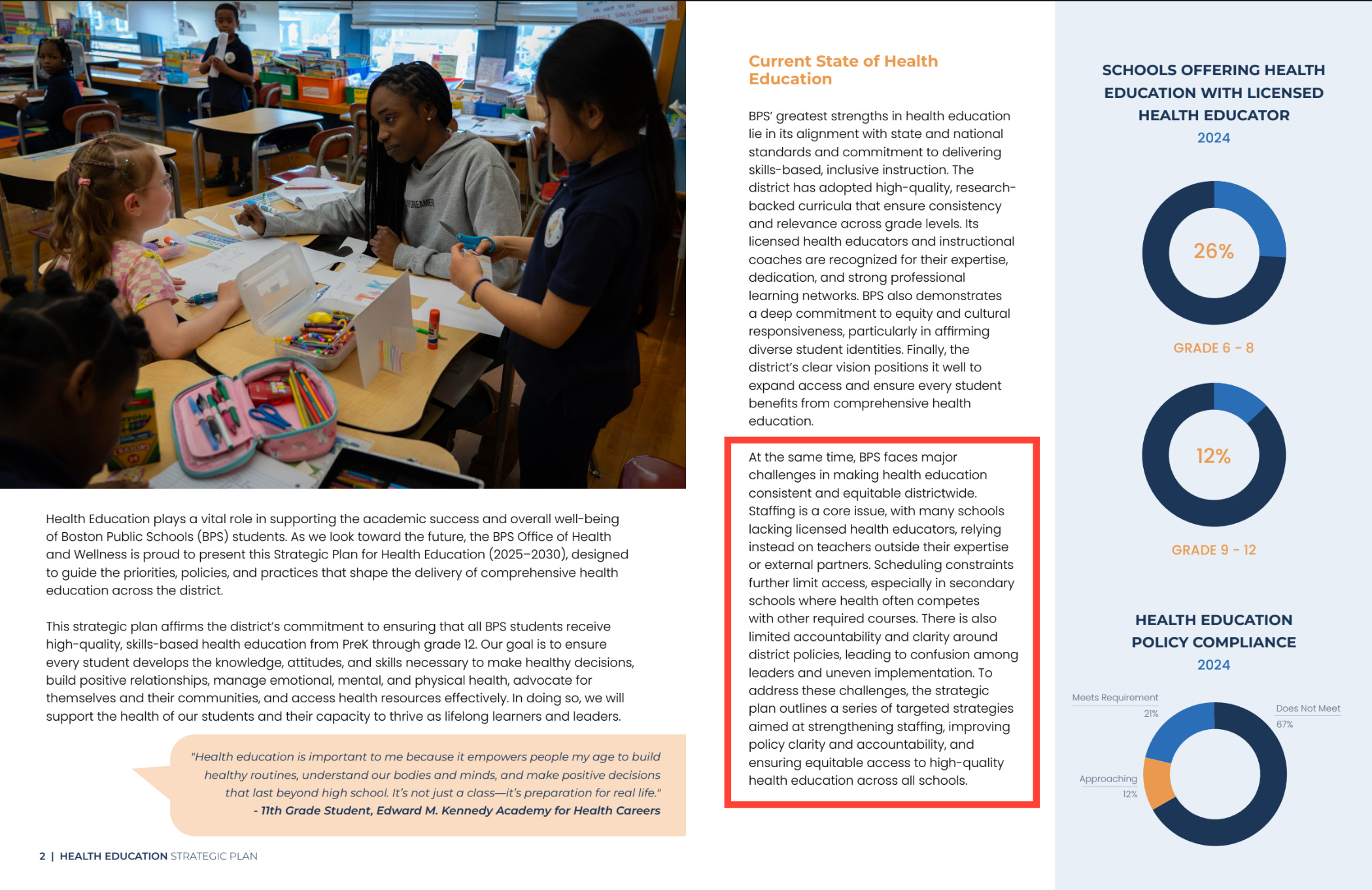
The fact that the district has a new strategic plan that influences sex education matters because, even if your child has been a BPS student prior to this year and they haven’t received sex ed, or if your school had sex ed but you were easily able to opt your child out, this will almost certainly change next year (if it hasn’t already).
To protect your child over the last few weeks of school (including “Pride month”), we recommend submitting our opt out letter ASAP. This letter is based on MA law as well as the recent US Supreme Court decision Mahmoud v. Taylor, which provides parental opt out rights beyond sex ed. To learn more about opting out and download our letter template, click below.

Side note: You may be wondering who the Rennie Center is, and what they have to do with this. Based on an analysis of the agencies funding the Rennie Center, as listed in their most recent annual report, the Center is largely driven by progressive donors. On its website the Center boasts of its commitment to “equity” and “anti-racism,” buzzwords that denote a leftist bias. Boston parents should find out why their school district seems to have outsourced its strategic planning to an ideologically-driven outside agency (but that’s a topic for another post).
Q: Why does the BPS seem to think they don’t have to opt parents out of lessons that clearly “primarily involve human sexuality issues”, as expressly stated in MA law?
A: They blame DESE.
In the BPS Human Sexuality Education Policy linked on the Sexual Health webpage, it says the following (emphasis ours):
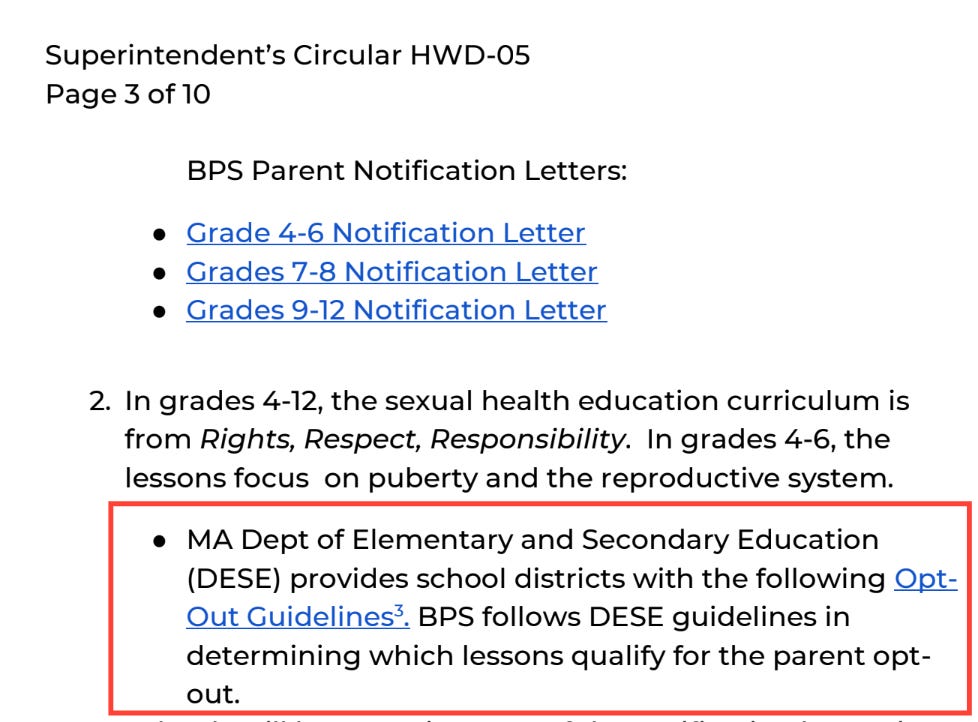
”BPS follows DESE guidelines in determining which lessons qualify for the parent opt-out.”
The following minutes from the March 26, 2026 meeting of the BPS District Wellness Council reiterate the district’s stated reliance on DESE. It also demonstrates (yet again - we’ve reported on this previously) how closely aligned DESE is with the 3Rs.
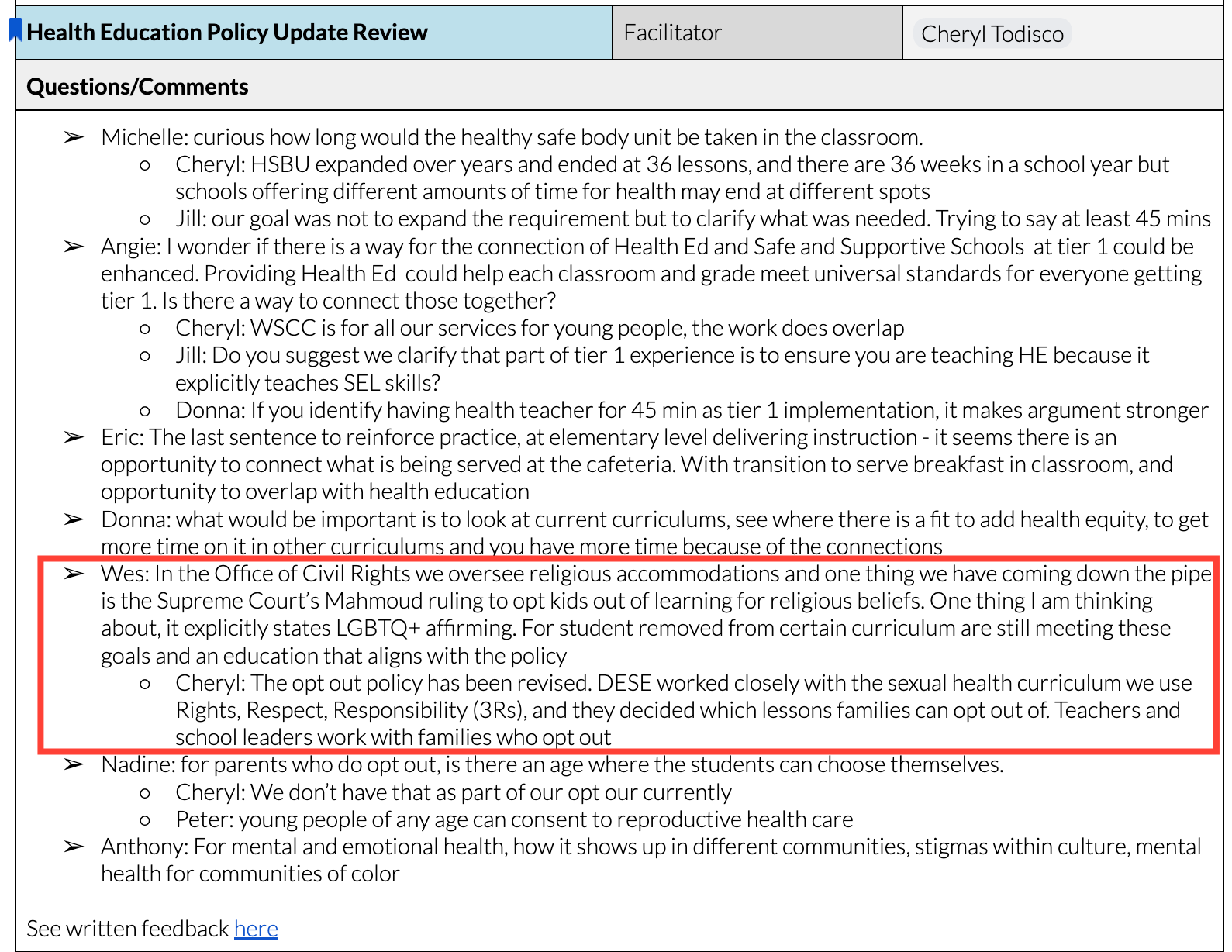
In a discussion about the Health Education Policy, Ms. Todisco stated that “DESE worked closely with the sexual health curriculum we use (3Rs), and they decided which lessons families can opt out of.”
Except the truth is, DESE doesn’t decide which lessons families can opt out of. They only make recommendations and provide guidance on standards.
In the DESE opt out guidelines mentioned in the health policy above, DESE specifically states that “school districts should consult with their own legal counsel for advice about whether the parental notification and opt-out law applies to a particular situation.” They mention certain standards that they deem “clearly fall” under the law, but they do not say these are the ONLY times that the opt out may apply. See below (emphasis ours).
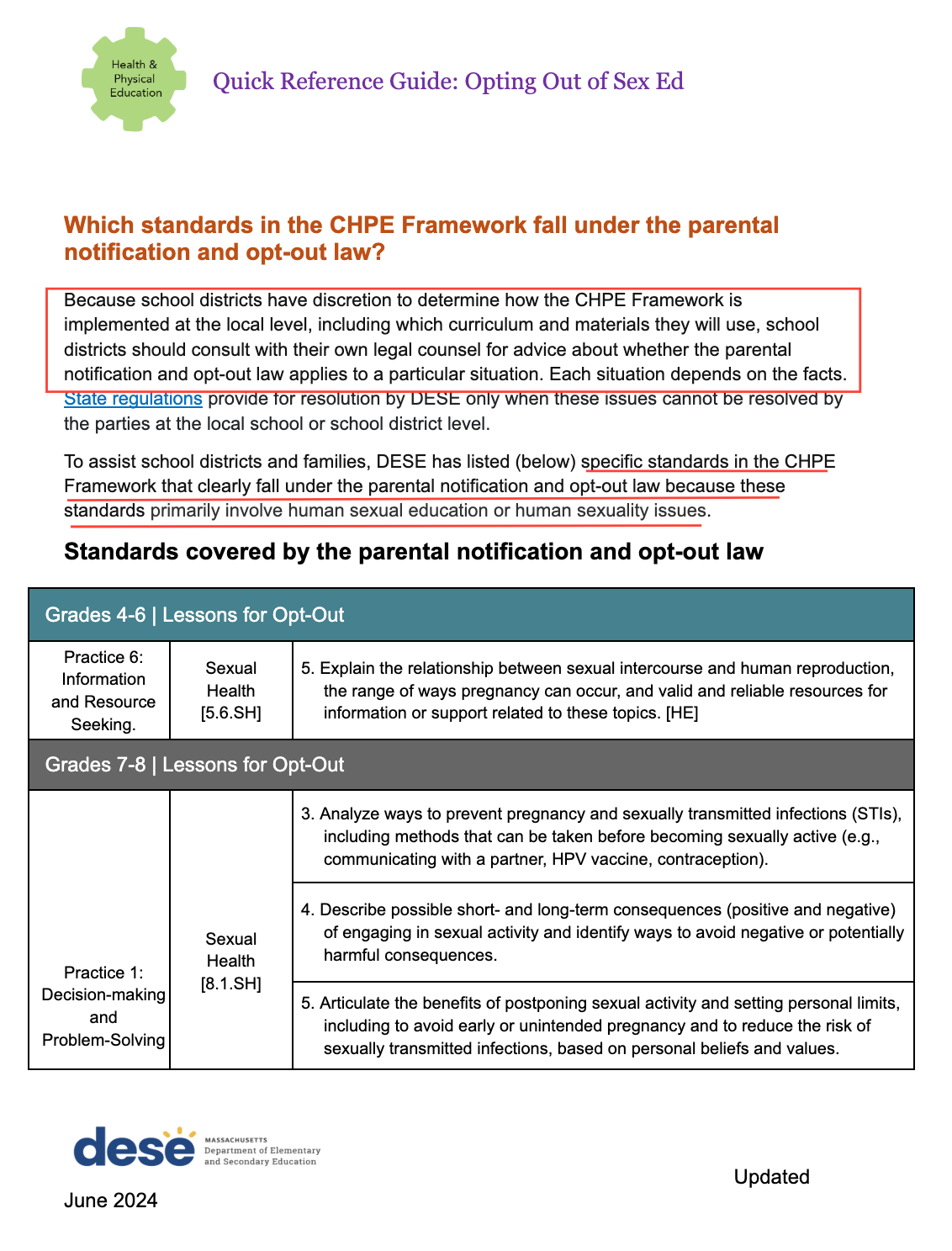
In other words, the BPS points to DESE, but they are still the ones responsible for this potential legal violation. If they mislead parents about their rights, it’s still their fault.
Q: What’s in the BPS sex ed lessons, anyway?
A: Lots of stuff that falls under the opt out law.
The BPS didn’t publish links to the 3Rs lessons they are using, only the names of the lessons and the “learning objectives.” However, since so much of the 3Rs curriculum is available online, we decided to see if we could track down the lessons they are likely using based on the information they provided. In many cases we were able to do so. To see the lesson plans we found that aligned with the BPS lesson list, click the links below. We also left the “may opt out” denotation on the ones the BPS has marked as such (but as you will see if you read the actual lessons, the majority of them should fall into that category).
1.1 Friendships
1.2 Circle of Life
2.3 Feeling Safe
2.4 Seeking Help
2.5 RESPECT
3.2 Feel SAFE!
5.6 So That’s How Babies are Made (may opt out)
6.1 Change is Good
6.3 Being a Sex Ed Sleuth (may opt out)
6.4 Consent, It Goes with Everything (may opt out)
6.9 When Should a Person (may opt out)
7.1 Introduction to Rights, Respect, Responsibility
7.2 Consent, It Goes with Everything (may opt out)
7.4 Building Healthy Relationships
7.6 Gender Identity, Gender Expression, and Sexual Orientation
7.9 Gender Stereotypes
8.1 Introduction to Rights, Respect, Responsibility
8.5 Sex Trafficking
8.6 Being a Sex Ed Sleuth (may opt out)
8.7 Birth Control Basics (may opt out)
8.8 Barrier Methods and How to Use Them Effectively (may opt out)
8.9 Protecting Your Health: Understanding and Preventing STIs/STDs (may opt out)
8.10 Learning About HIV
9-10.2 My Boundaries
9-10.4 Communicating With Others
9-10.5 Empathy & Active Listening
9-10.6 Sexual Systems – Anatomy
9-10.7 Sexual Orientation and Sexual Identity
9-10.8 Decision Making
9-10.9 Know Your Options – Effective Birth Control (may opt out)
9-10.10 They Love Me, They Love Me Not
9-10.11 Using Technology Respectfully
11-12.1 Introduction: Climate Setting
11-12.2 Unhealthy Relationships and Communicating Boundaries
11-12.3 Is it Abuse If…?
11-12.4 Sexual Decision Making (may opt out)
11-12.5 Planning & Protection: Avoiding or Maintaining STDs (may opt out)
11-12.6 Get Savvy about STD Testing (may opt out)
11-12.7 Sex Trafficking
11-12.8 Our Space, Safe Space
We have submitted a public records request to the BPS for the actual lesson plans they are using. When it is received, we will update this post. However, we think that the information above is enough to clearly demonstrate that many additional lessons should fall under the opt out law beyond the ones noted by the BPS, and that parents should make sure their kids are fully opted out ASAP.
Q: Is there anything else parents should know about what’s happening in the BPS?
A: Yes - especially if your kids are little.
BPS parents of kids in grades K-3 need to be especially proactive when it comes to this issue. Do not wait for the district to notify you that “sexual health” classes are coming, because based on what we’ve discovered, they probably won’t.
On the current BPS Sexual Health webpage the K-3 lessons are not yet listed (though we obtained a the link to that lesson list elsewhere). In addition to no information on the lessons being posted to the website, there are NO opt out letters mentioned for K-3 students in the Human Sexuality Education policy (see below). We suspect this is because parents in these grades are not being notified that sex ed is taught.
If that is indeed the case, the BPS may attempt to justify its lack of parental notification because currently none of the lessons geared for K-3 in the list that we found are marked “may opt out.” However, despite their lack of designation, we believe several of these lessons DO contain human sexuality issues such as teaching kids the names of genitalia, introducing gender ideology, and more. Because of this, BPS parents of youngsters must realize that they can’t wait for a notification letter to find out what is being taught. The best way to avoid discovering too late that your 6 year old was taught about sensitive topics without your knowledge is to opt out proactively using our opt out letter (and if you read this post and realize that the district never notified you and the lessons have already been taught to your child, let us know).
We will update this post if new, or different, information is received. In the meantime, we want to hear from BPS parents about their experience with sex ed this year. Did you opt out, and was your request honored? Were you made aware of the changes to the curriculum? Share your experience in the comments below or email us at massinformedparents@gmail.com. Also, bookmark this post and make a note to send in our opt out letter next school year. If your child’s school doesn’t fully honor your opt out, or if they try to tell you that you can only opt out of a handful of the sex ed lessons, we want to know (and so does our attorney).
Not in the BPS? This sex ed slight-of-hand could come for your town, too. Don’t wait for your district to send out a sex ed opt out form that might only opt your child out of a portion of the curriculum. Be proactive and submit ours instead. And if they try to tell you that you can only opt out of a few lessons, you know where to find us.
Did you love this post? Do you know people who would like to receive this type of in-depth analysis in their inbox, once a week (or whenever we post it)? If so, share Massachusetts Informed Parents Substack with your friends now!
Was this post forwarded to you by a friend? If so, subscribe today!
TL;DR:
Boston Public Schools (BPS) revised its sex-ed program midyear to adopt the “Rights, Respect, Responsibility” (3Rs) curriculum districtwide from K-12, while limiting which lessons parents were told they could opt out of under Massachusetts law.
Many lessons covering topics like sexual intercourse, gender identity, sexual orientation, anatomy, and puberty were not labeled as opt-out eligible, even though they clearly involve “human sexuality issues.”
Parents may be misled by notification forms and guidance documents into thinking they were opting out of all sex-ed instruction when, in practice, many lessons would still be taught. The Massachusetts Liberty Legal Center has since sent a warning letter to the BPS informing them of how their practice may violate the Massachusetts parental opt-out law.
The BPS’s new long-term health education plan further expands sex-ed instruction across all grades, including K–3. Links to sample lessons likely used by the BPS are provided. Parents are encouraged to proactively review curriculum materials and submit broad opt-out requests.